
PROBATION OFFICE (ADULT AND JUVENILE)
Department of Law and Order
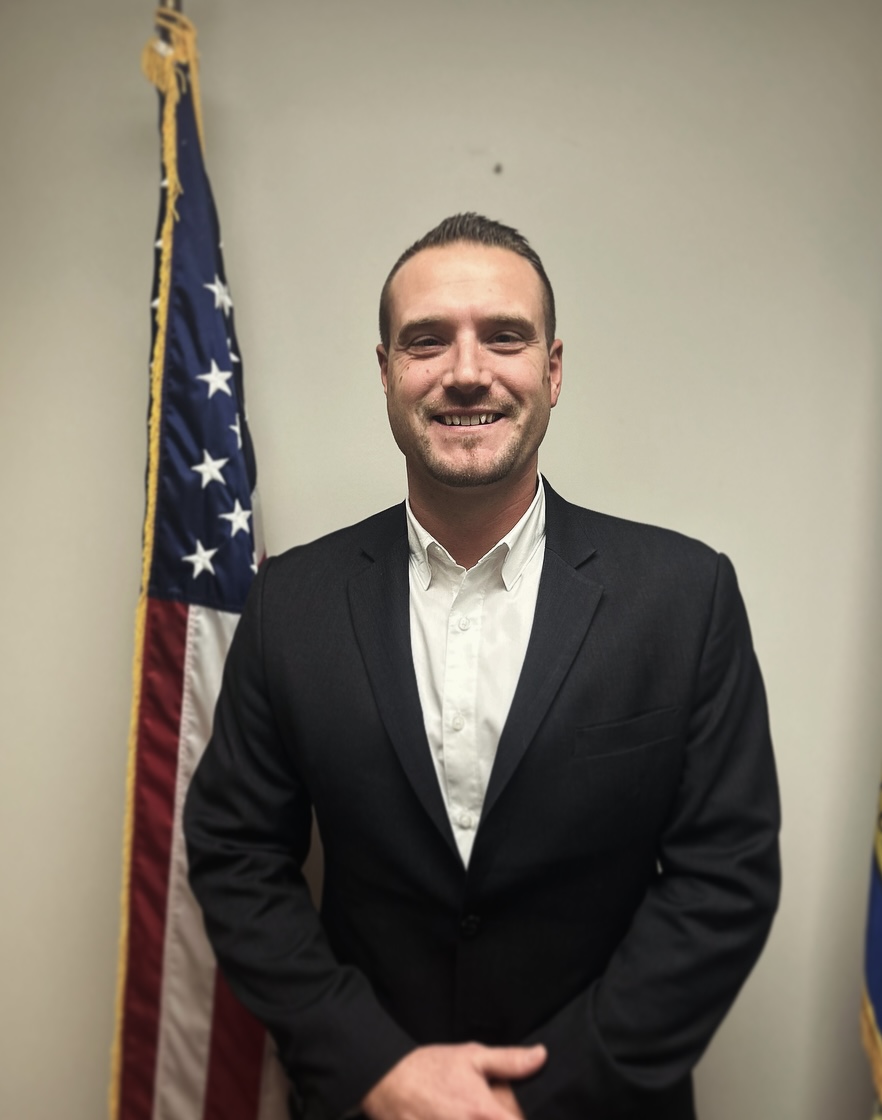
Craig Wise, Probation Director Greene County Courthouse, 1st Floor
10 East High Street, Waynesburg, Pennsylvania 15370
Phone: 724-852-5250 / Fax: 742-852-5344
Office Hours: 8:30 a.m. – 4:30 p.m., Monday – Friday
The Probation Office conducts pre-sentence investigations, parole and probation violation investigations and reports for the Court of Common Pleas and county magisterial districts. The office supervises parolees, probationers and mandatory releases (i.e., due to jail overcrowding) and refers clients to community agencies.
Adult Probation supervises individuals 18 years of age and older, including verifying their residence and employability. Adult Probation also prepares pre-sentence reports for the courts and collects fines, costs and restitution.
Juvenile Probation supervises youths and families. Caseworkers develop a treatment plan to help the client and the client's family work out their problems. Juvenile Probation also makes progress reports to the court and recommendations on sentencing and probation.
The Probation Office is committed to protecting the safety of the public, addressing the needs of crime victims, improving county juvenile/adult probation and parole services and assisting in the fair administration of justice by ensuring the custody, control and treatment of offenders under the jurisdiction of the county.
Pennsylvania Board of Probation and Parole Programs:
County Probation and Parole Officers’ Firearm Education & Training Commission: This Commission was established to provide uniform firearms training for county probation officers. The Commission is charged with educating and training county probation officers in the use of firearms and is funded through fees collected by the counties. The Pennsylvania Board of Probation and Parole is responsible for providing support staff to this Commission.
Parole Re-Entry Programs (PREP Units): Toward the end of assisting the parolee transition back into the community, the Pennsylvania Board of Probation and Parole established Parole Re-Entry Program (PREP) units, located throughout the state. These units provide parolees with a structured environment. The PREP units function as centers to which parolees report on a daily basis, Monday through Friday. Electronic monitoring of parolees is mandatory for the first month. Urine samples are taken at least once a week. All offenders attend group classes for parole orientation, AIDS awareness and employment opportunities. When employment is obtained, offenders are required to call in daily, report one to two times a week, submit to urinalysis and be seen at home by their parole agent. Additionally, the staff in these units works in conjunction with the local NA/AA chapters and treatment providers to run closed-door sessions for parolees.
Treatment Alternatives for Parole Violators: The Pennsylvania Board of Probation and Parole has implemented two treatment alternatives to re-incarceration of drug and alcohol abusing technical parole violators. They are the Substance Abuse Violators Effort (SAVE) and the Residential Substance Abuse Treatment (RSAT) programs. If an offender is referred to SAVE and fails the program, he or she is automatically referred to the RSAT program.
Substance Abuse Violators Effort (SAVE): There are two SAVE programs. One is geared toward state-sentenced offenders with substance abuse problems who would normally be returned to a state correctional facility due to technical parole violations, and the other is for state-sentenced offenders with substance abuse problems who are returned to a county correctional facility due to technical parole violations.
SAVE/State Correctional Institutions: This program is a joint effort between the Pennsylvania Board of Probation and Parole and the Department of Corrections and is designed to be a halfway-back program. It is a 12-month program consisting of four phases, each approximately three months in length. Active program participation is required of parolees, with movement from phase to phase, in either direction, determined by project staff based on performance.
The first phase is a three-month stay at Eagleville Hospital's In-Patient Program. Focus is on educating the offender about addiction, managing emotions, developing skills to deal with relapse and understanding the triggers to drug use.
Phase two consists of release to the community on enhanced supervision with electronic monitoring and curfews, with intensive outpatient therapy. Treatment will consist of several hours per day, five days per week. Focus will continue to be on identifying and developing skills to remain drug- and alcohol-free.
Phase three utilizes outpatient therapy several times per week. The individual and group sessions allow for learning new skills and discussing ongoing problems the offender may be encountering. Enhanced supervision will be less restrictive, curfews will be less rigid and electronic monitoring may be lifted.
Phase four is enhanced supervision with no electronic monitoring with outpatient therapy emphasizing relapse prevention. These groups help the offender identify and work through high-risk situations they may be encountering. Upon successful completion of the program, parolees are placed on general supervision.
SAVE/County Correctional Facilities: The county SAVE program targets technical parole violators with substance abuse problems who are being returned to a county correctional facility. If deemed appropriate for the program by the district director or designee, the county prison warden must approve, and the offender must agree to participate in the program. The offender will then be transferred directly from the county correctional facility to a residential treatment facility for three months. Treatment will include drug and alcohol education, emotion management, vocational and educational assessment and reintegration planning. Following completion of this phase, the offender will be returned to the community under an enhanced level of supervision.
During the next nine months, the offender will be required to continue intensive outpatient treatment which will include relapse prevention programming. Electronic monitoring and frequent urinalysis will also be administered while under this enhanced supervision. Supervision requirements become less restrictive as the offender progresses through the remaining three phases which last nine months. Should an offender experience difficulty during any one phase, he or she can be returned to a previous phase until stability is achieved. Upon successful completion of the program, parolees are placed on general supervision.
Residential Substance Abuse Treatment (RSAT): The RSAT program is similar to the SAVE program in that it provides an alternative to long-term recommitment for technical parole violators with substance abuse problems. There are three phases to the program:
Phase I consists of six months in a therapeutic community at SCI-Graterford, SCI-Huntingdon, SCI-Cambridge Springs, SCI-Camp Hill, SCI-Somerset or SCI-Albion. While in the treatment community, offenders participate in group meetings and receive individual counseling. Active participation is expected through discussing and sharing experiences during meetings, completing homework assignments and writing in journals. During this time, offenders learn about addiction and develop coping skills which can be used in the community. In anticipation of their return to the community, an aftercare plan is developed, which will include vocational and educational programming. This treatment experience is designed to assist offenders in developing a drug-free lifestyle which will enable them to successfully complete parole and avoid returning to jail.
Phase II includes a six-month placement in a community corrections center where offenders attend intensive outpatient treatment. Active participation in intensive substance abuse treatment, including relapse prevention and aftercare planning, is expected and required. Offenders must obtain a sponsor and attend group meetings on a regular basis. Vocational and employment training will also be provided, which will assist in finding a job. They will have the opportunity to apply the skills learned in Phase I and develop new skills to assist them in remaining drug-free while in the community. Additionally, during this phase, offenders have the opportunity to earn privileges, such as furloughs or curfew raises through active participation and completion of RSAT program requirements.
Upon successful completion of both phases, offenders will be re-paroled and will have an intensive caseplan which will assist them in staying drug- and alcohol-free and maintaining a crime-free lifestyle. They will be placed on an enhanced level of supervision which will consist of at least one face-to-face contact with the parole agent per week, along with frequent urinalysis and electronic monitoring, as deemed appropriate. During this six-month phase, treatment focuses on relapse prevention techniques through individual and group therapies. This increased supervision level will be handled by the Parole Re-Entry Program (PREP) units for districts in which they are available or by the agent of record for those districts without a PREP Unit.
This program is unique in that there is a direct line of open communication between the Parole Board, Department of Corrections and the treatment providers. Offenders receive a continuum of services, which begins when they are first identified by their parole agent as eligible for RSAT, and continues through their period of re-incarceration, as they move halfway back to the community and, ultimately, when they return to the community.
Both SAVE and RSAT allow for the Board to determine which offenders are eligible for the program. Additionally, both are cooperative efforts with the Pennsylvania Department of Corrections. Both programs also received national recognition by the American Probation and Parole Association (APPA).
Fatherhood Initiative Program: The Pennsylvania Board of Probation and Parole is committed to providing support to offenders and their families, with a focus on relationship building with their children, as well as understanding the responsibilities of providing for their families and becoming positive role models for their children.
The Board's Fatherhood Initiative program is a statewide program for new parolees who have children residing in their homes. The program will assist recently released parolees who, immediately after release from incarceration, are in the most vulnerable time regarding reintegration into the community and with their families. It is crucial to the parolees' success to have a support system for the transition into the lives of their children, family and community.
Designated parole agents in each of the Board's field offices will provide newly released offenders with parenting information and a referral for local community resources in that area.
Other Special Programs: The Pennsylvania Board of Probation and Parole offers other special programs aimed toward offender rehabilitation and reintegration into the community. Participation is determined based on the individual circumstances and needs of each parolee.
For more information, click here.
Today's date is:
For general information, please contact the Information Services at 724-852-5399 / Toll Free: 1-888-852-5399. County Office Building, 93 E. High Street, Waynesburg, PA 15370